Lovefield Wireless 
FCC Coexistence Study for IEEE 802.11 WiGig and Radar
Lovefield Wireless studied whether consumer-grade short range miniature radar devices create interference on other communicating systems operating in the 60 GHz unlicensed band, focusing on 60 GHz Wi-Fi (WiGig) as defined in the standards IEEE 802.11ad, 2014 and IEEE 802.11, 2016.
The approach in the study is based on standard link budget models that are typically used for assessing the quality of a wireless link, or for evaluating spectral coexistence between radio systems.
Monte Carlo simulation with carefully justified radio system parameters were used to assess the interference impact of the miniature short range radars. The study was intended to inform the discussion around an increased emission power of Google’s Project Soli short range miniature radar system, developed by Google ATAP in 2017, up to a level compliant with the ETSI EN 305 550 standard, although the results potentially could be extrapolated to similar technologies intended to operate within the 60 GHz band. Project Soli is a sensor for touchless gesture interactions in consumer electronics devices (wearables, home networks, phones).
The study can be downloaded from here.
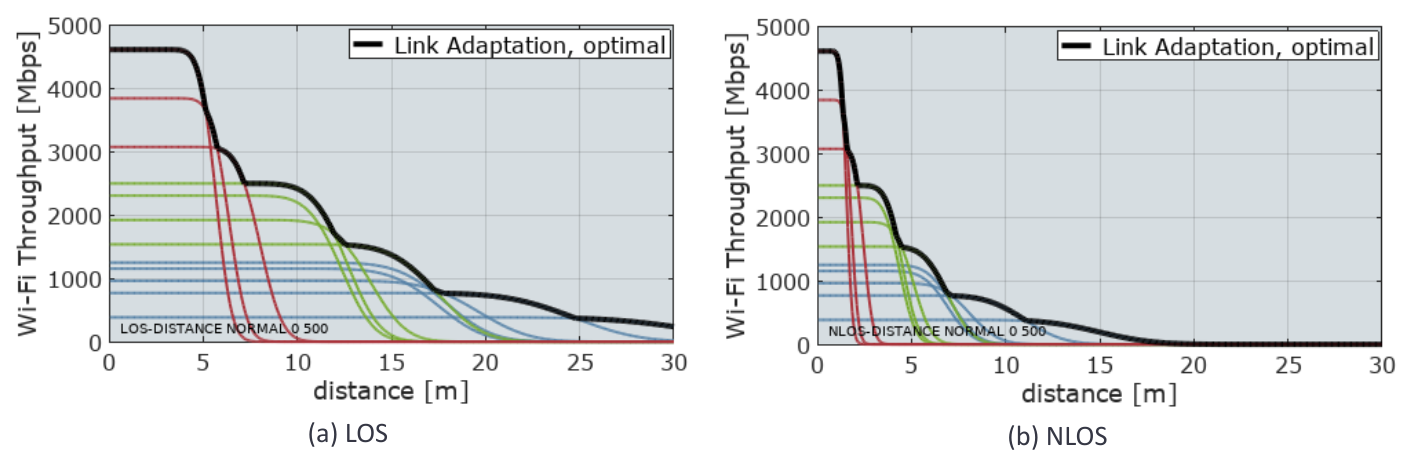
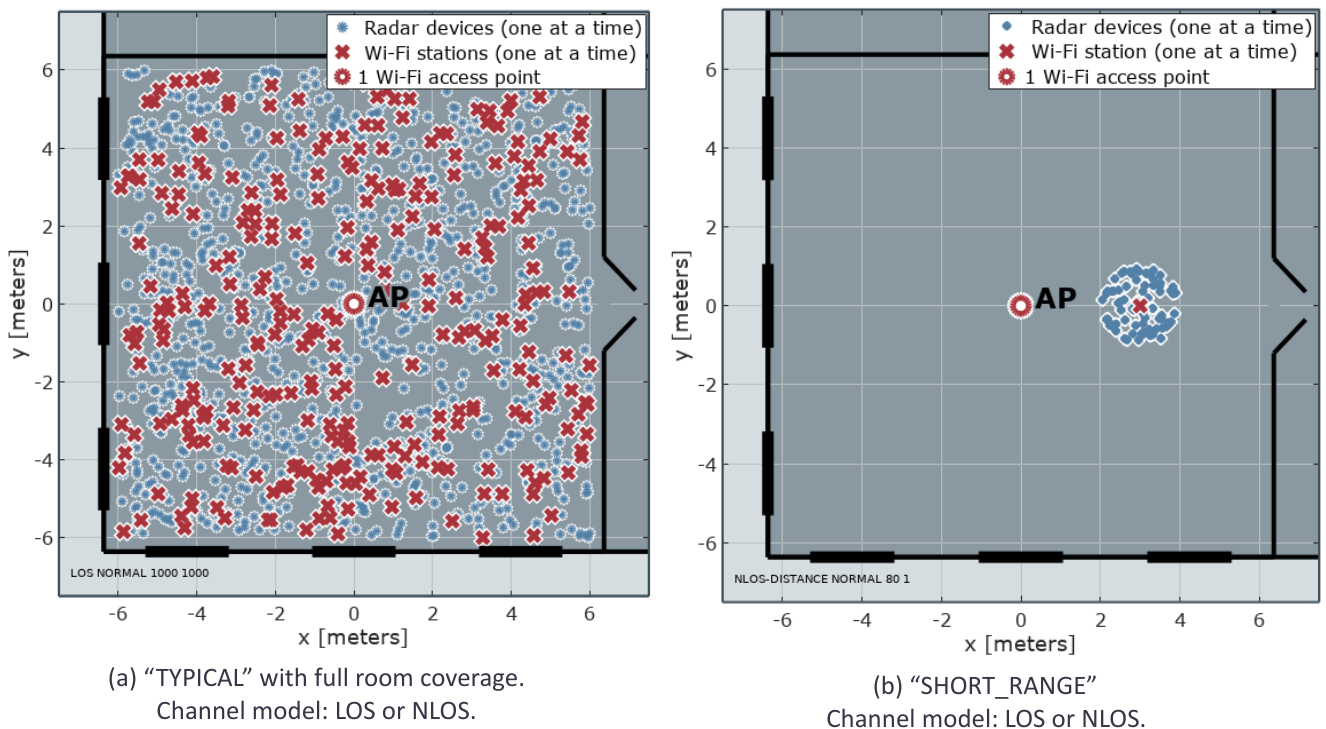
Simulation scenarios. There are always only three devices in each simulation experiment: One WiGig access point, one receiving WiGig station, and one radar device. The WiGig antennas always point to each other. The radar antenna always points to a randomly selected direction and therefore the radar’s main beam may or may not hit the main beam of the WiGig receiver.


© Lovefield Wireless GmbH.
All rights reserved.